
Carbon Alloy Catalysts
- Decarbonization with Carbon -
Overview
- Our company will reduce material costs and dependencies on precious metals by sharply reducing, or even eliminating, the use of platinum.
- Our proprietary material structures are capable of realizing a wide range of catalytic capabilities and high activity.
- We plan to accelerate and optimize development through digital transformation (DX), including simulation, to swiftly deliver solutions.
Carbon Alloy Catalysts
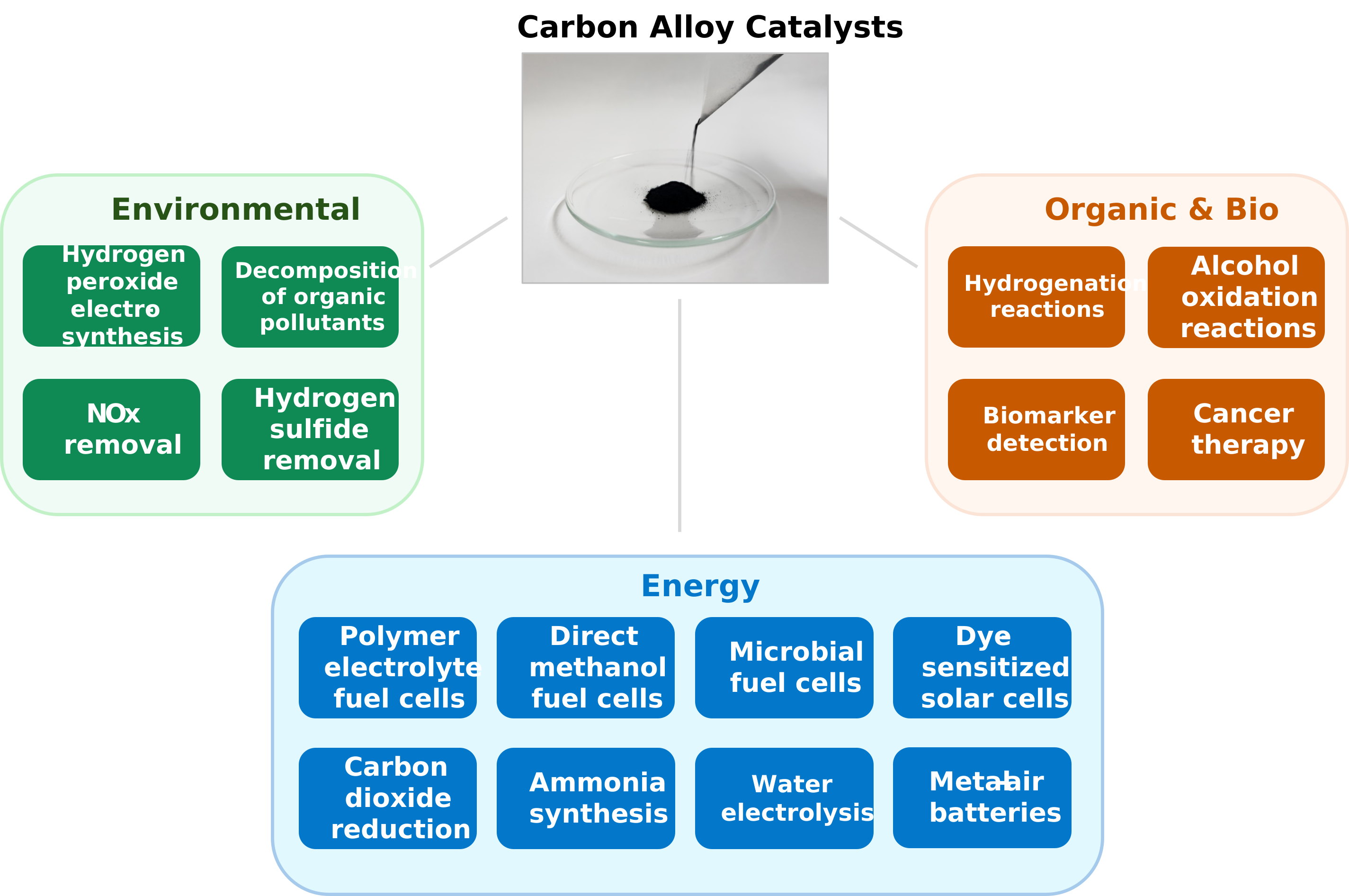
Carbon Alloy Catalysts※1 are carbon-based catalysts that do not use any precious metals and are expected to find applications across a diverse range of fields, including the environment, energy, organic chemistry, and biotechnology.
In particular, because they exhibit high activity in the oxygen reduction reactions (ORR) used in fuel cells, etc., and also because they do not require platinum (Pt), a scarce and expensive metal, they can help reduce both the cost of and dependencies on precious metals.
Additionally, reports indicate that carbon alloy catalysts exhibit resistance to substances that cause platinum catalyst poisoning, suggesting potential applications in environments in which platinum cannot be used.
※1 Carbon-alloys (defined by Carbon society Japan) : “carbon alloys are carbon materials mainly consisting of multicomponent carbon atom aggregates. In the materials chemical and/or physical interactions act between each structural unit. Here, carbons with different bond nature are denoted as different components.”
Promising Applications of Carbon Alloy Catalysts
Features of the catalyst manufactured by our company
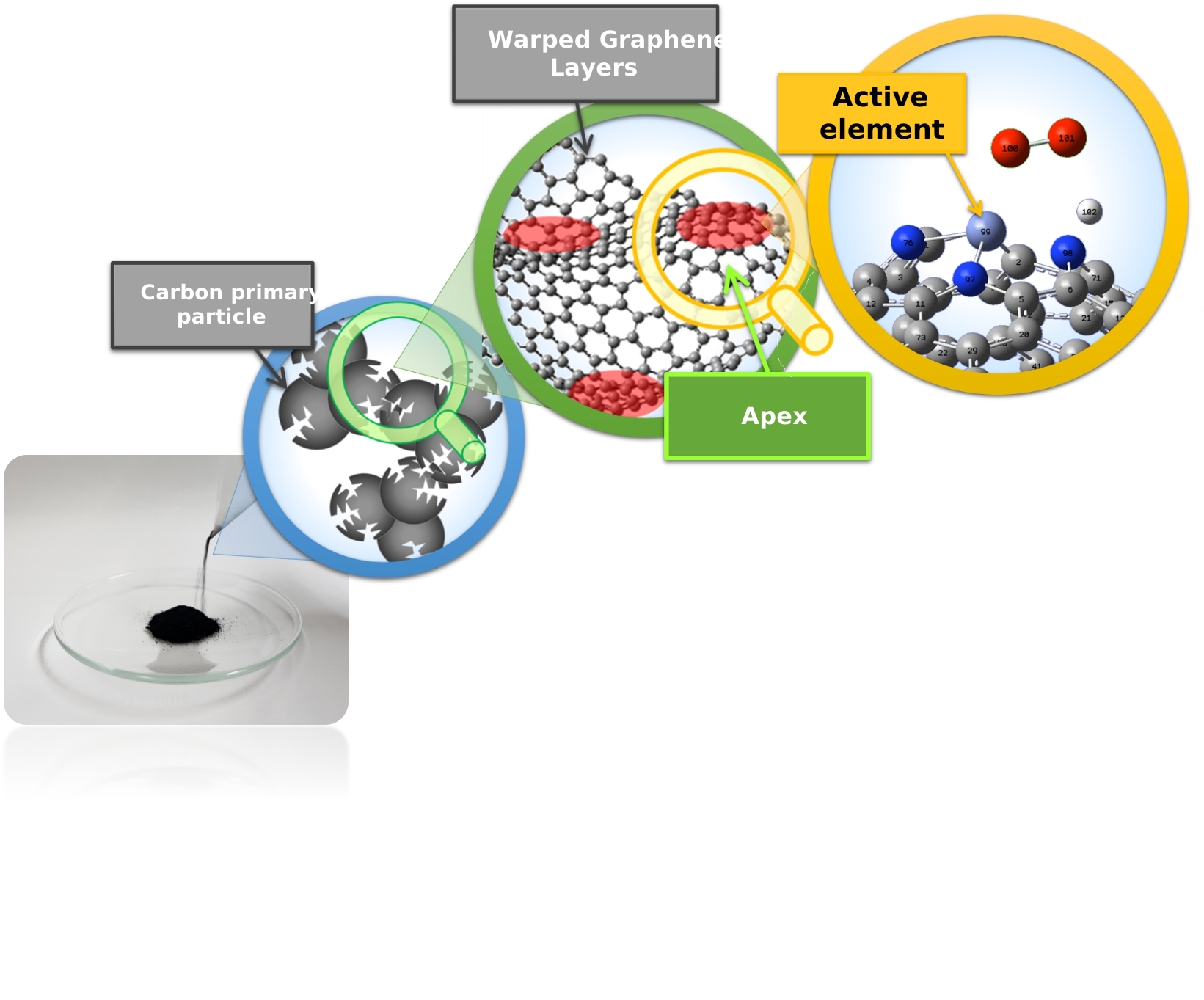
Our carbon alloy catalyst, developed jointly with Professor Junichi Ozaki of Gunma University, is a carbon-based catalyst that achieves both high activity and excellent electron conductivity by introducing nitrogen and non-precious metals (M) into a warped graphene layers (WGLs)※2 to form M-Nx active sites. In addition, it is resistant to catalyst poisoning because it does not adsorb carbon monoxide (CO) or the sulfo group (-SO₃H) of ionomers.
※2https://www.sciencedirect.com/science/article/abs/pii/S0008622324001295https://www.sciencedirect.com/science/article/abs/pii/S0008622325010371
Platinum substitute (non-platinum)
Our proprietary design utilizing base metals reduces both material costs and dependencies on precious metals.
ORR activity
Our product, the first non-platinum catalyst adopted for real-world applications, features world-class activity.
A diverse range of applications
Potentially applications of our catalyst encompass fuel cells, electrode catalysts, and gas treatment catalysts.
Reaction selectivity
Our catalyst features high reaction selectivity and offers high expected efficiency, even for applications for which the use of platinum catalysts is likely to cause side reactions.
Stable supply
Since carbon materials are easy to manufacture on the industrial scale, we can mass-produce the catalyst using our manufacturing techniques.
Flexibility in design
Our proprietary design technology makes it possible to manufacture materials tailored to your specific needs. Please feel free to contact us with any requests.
The structure of our carbon alloy catalyst
Our DX initiatives
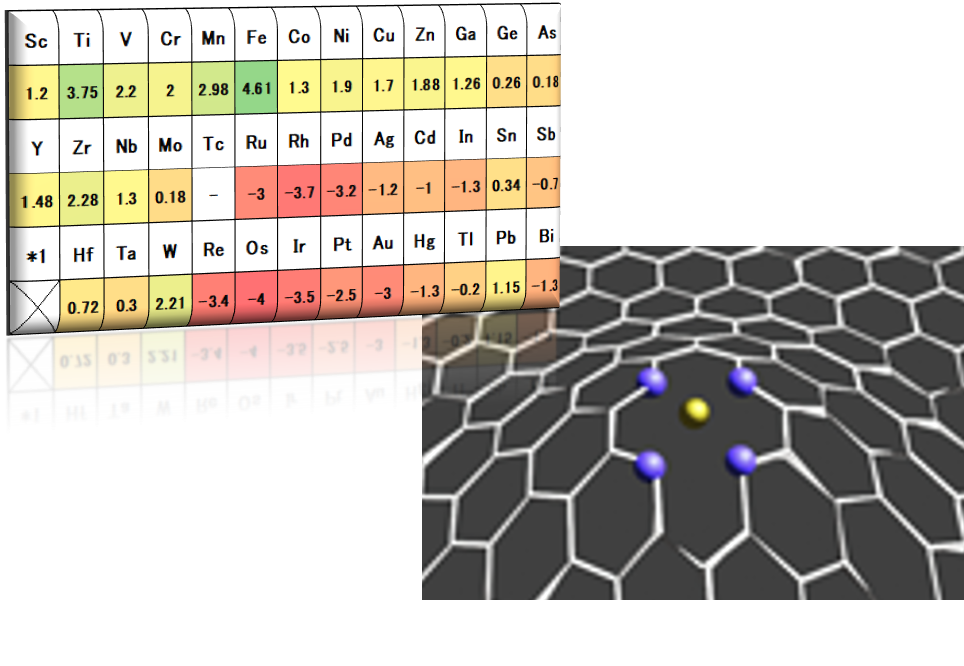
Due to the wide range of elements and structures involved, the range of potential combinations for carbon alloy catalyst design is virtually unlimited.
Rather than relying solely on traditional development methods involving repeated trial-and-error experiments, our company has adopted the strategy of applying digital transformation (DX) to accelerate and advance development efforts※3.
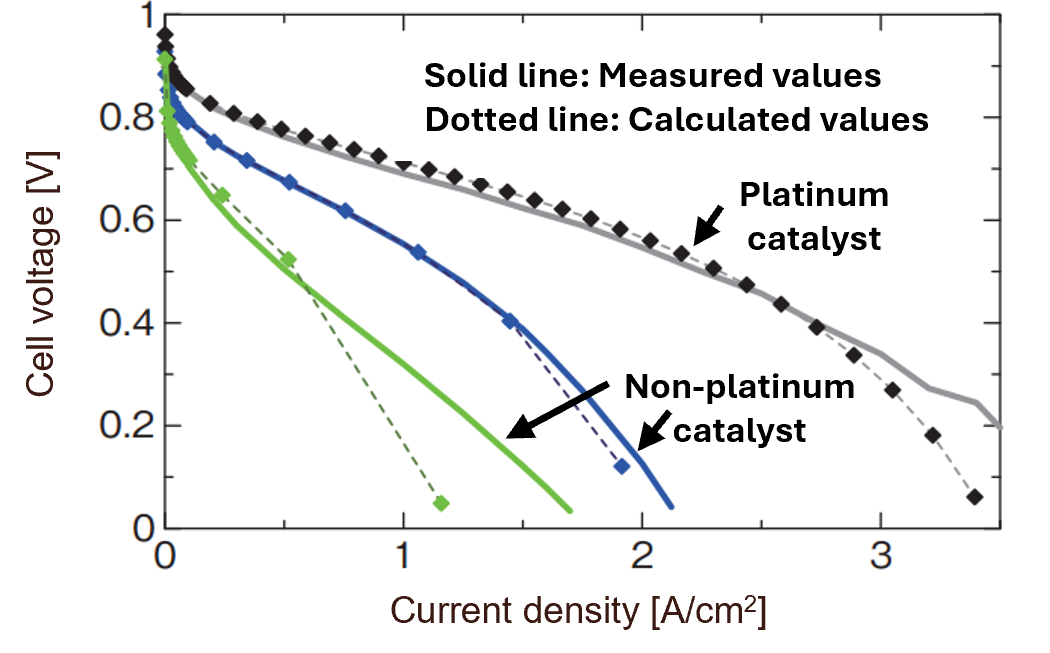
Based on performance in real-world application experience※4 and the results of digital technology validation, the success we have achieved means that we can now incorporate activator elements into our proprietary warped graphene layer material to produce a catalyst that combines high activity and high durability at low cost.
※4https://www.nisshinbo.co.jp/nish/english/news/pdf/1647_1_en.pdf
Simulation of fuel cell power
generation performance based on
results of simplified measurement
Screening for activator
elements based on
theoretical calculations